Building a Trusted, Future-Proof Coordination Layer for Digital Capital Markets
Malaysia’s sovereign Layer-1 blockchain opportunity merits serious discussion among institutional stakeholders and policymakers.
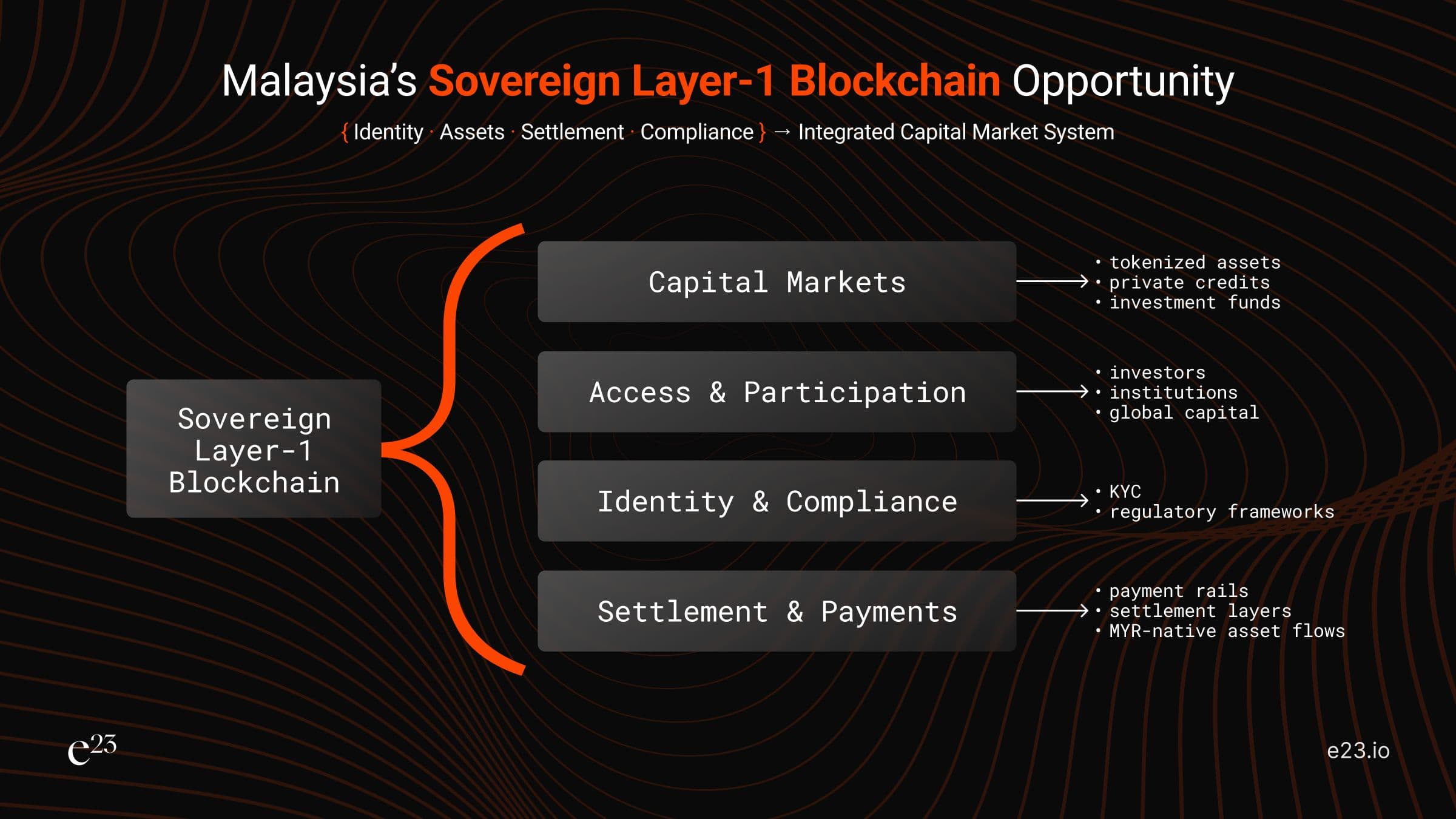
Rather than viewing it as another standalone blockchain project, a more practical perspective is emerging. The opportunity lies in designing a trusted coordination layer that connects identity, tokenized assets, settlement mechanisms, and compliance frameworks into a coherent, institutional-grade capital market system.
As Malaysia advances its digital finance ambitions under the Capital Market Masterplan 2026 - 2030, alongside the integration of MyDigital ID into financial services and accelerates in digital assets adoption, the conversation has evolved. Attention now includes how infrastructure should be architected to support scalable, compliant, and future-resilient markets.
Why the Conversation Has Moved Beyond “Just Launching a Blockchain”
Many discussions around blockchain initiatives centre on launching a new network. While technically notable, this perspective risks overlooking practical utility in regulated environments.
A Malaysia sovereign Layer-1 blockchain, when approached with institutional intent, functions as a coordination layer that addresses practical challenges in digital finance:
- Onboarding complexity
- Fragmented compliance processes
- Delayed settlement cycles
- Limited interoperability between systems
This coordination approach aligns with institutional priorities such as:
- Reliability
- Auditability
- Regulatory alignment
The Malaysia sovereign Layer-1 therefore represents an infrastructure strategy grounded in real financial use cases.
Malaysia Is Not Starting from Zero - Current Building Blocks
Malaysia has already established several foundational components that support a coordinated digital financial system.
Capital Market Masterplan 2026 - 2030
The CMP 2026 - 2030 outlines:
- Capital market expansion to RM5.8 - RM6.3 trillion by 2030
- Long-term growth toward RM13.8 - RM20 trillion by 2045
- Support for tokenization and digital assets
- Broader participation and sustainable finance mobilisation
As explored in our previous blog, tokenization introduces a new operational model for capital markets, where issuance, ownership, and settlement become increasingly digital and programmable.
Within this context, the opportunity and role of sovereign Layer-1 becomes more pronounced.
MyDigital ID and Financial Integration
The national digital identity system is progressing toward financial services integration, with Phase 2 sandbox testing involving over 15 major banks and fintech firms to strengthen digital identity in online banking. This financial integration supports:
- Secure identity verification
- Efficient eKYC processes
- Reduced onboarding friction
Advancing Payment and Settlement Rails
Malaysia continues to enhance its payment and settlement rails including faster payment systems and cross-border settlement capabilities. Ongoing modernization is taking place to provide the transactional backbone needed for efficient MYR-native asset flows.
Regulatory and Compliance Frameworks
Regulatory oversight by the Securities Commission Malaysia and Bank Negara Malaysia continues to strengthen, creating a trusted environment for innovation within clearly defined boundaries. This structured approach supports the development of digital assets while upholding compliance standards, enabling institutions to participate with greater confidence and clarity.
These components are already operating effectively in isolation. The strategic question is what becomes possible when they are deliberately designed to interoperate through a sovereign Layer-1 blockchain.
The Sovereign Layer-1 as a Coordination Layer
A sovereign Layer-1 blockchain, conceived as a coordination layer, would serve as the connective tissue across the ecosystem. It would enable:
- Seamless linkage between MyDigital ID for verified onboarding and tokenization asset issuance
- Atomic, compliant settlement that reduces counterparty risk and shortens clearing cycles
- Unified compliance rails that allow institutions to meet regulatory requirements without complicating processes
- Support for MYR-native asset flows, preserving currency sovereignty while enabling tokenization of private credits, investment funds and digital assets
For institutions, these improvements translate into lower operational costs, faster capital velocity, and greater confidence in participating in tokenized markets. The result is not speculative infrastructure but practical enhancements to existing capital market functions.
Security in the Quantum Era - Why Post-Quantum Cryptography Is Essential
As quantum computing capabilities advance, traditional cryptographic systems face existential risk. A sovereign Layer-1 blockchain handling national-scale identity, assets, and compliance must incorporate quantum-resistance protections from inception.
Malaysia has recognized and established forward-looking security initiatives through its National Post-Quantum Migration Plan 2025 - 2030, supported by CyberSecurity Malaysia and aligned with the MySEAL cryptographic algorithm standards. The plan provides a structured pathway for organisations and critical infrastructure to transition to post-quantum cryptography (PQC).
In the context of Malaysia’s sovereign Layer-1, PQC would future-proof:
- Digital identity verification under MyDigital ID finance use cases
- Tokenized asset ownership records and transfer mechanism
- Compliance and audit trails that must remain verifiable for decades
Implementing PQC at the protocol level ensures the infrastructure remains secure against “harvest now, decrypt later” (HNDL) attacks. For institutions managing long-term assets or sensitive client data, this level of forward security is imperative and is becoming a baseline expectation rather than an optional enhancement.
Consensus That Fits Institutions - The Case for Proof of Stake in Malaysia’s Layer-1 Blockchain
Consensus mechanism choice significantly influences suitability for regulated capital markets. Proof of Stake offers clear advantages for an institutional sovereign Layer-1 compared to energy-intensive Proof of Work.
What Is Proof of Stake?
Proof of Stake (PoS) is a consensus mechanism in which network validators are selected to propose and validate new blocks based on the amount of native tokens they hold and are willing to stake as collateral, rather than competing through computational power. Participants “stake” their tokens to secure the network; honest behavior is incentivised through staking rewards, while malicious actions can result in slashing (partial loss) of the staked assets. The economic security model replaces the energy-heavy mining process used in Proof of Work.
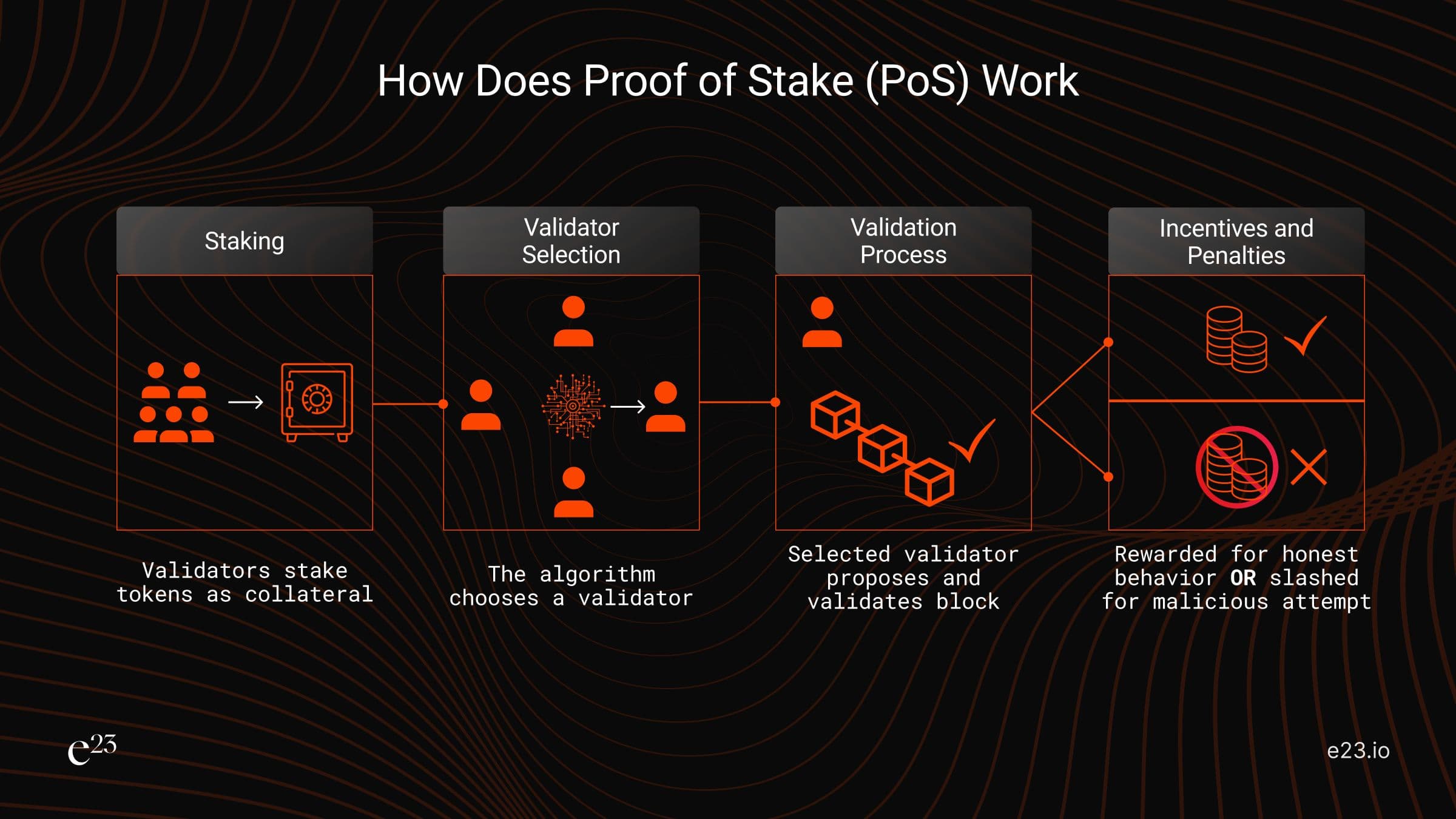
Why PoS is Well-Suited for a National-Scale Layer-1 Blockchain:
PoS delivers several attributes that align closely with institutional and national requirements:
- Superior energy efficiency, aligning with Malaysia’s sustainability goals under the Capital Market Masterplan 2026 - 2030
- Enhanced scalability and faster finality, supporting high-volume settlement of tokenized assets and MYR-native asset flows
- Better alignment with governance models that can incorporate regulatory oversight and validator accountability
These attributes facilitate smoother institutional participation by reducing environmental concerns, lowering operational overhead and enabling predictable performance. In a PoS-based sovereign layer-1 blockchain, settlement can occur with the speed and certainty required by financial institutions while maintaining the security and decentralisation properties essential for trust.
Positioning Malaysia as an APAC Digital Finance Hub
By developing a nationwide sovereign Layer-1 as a pragmatic coordination layer, secured by PQC and powered by PoS, Malaysia can strengthen its position as a credible digital finance hub in the APAC region.
This approach leverages existing strengths in Islamic finance, sustainable investment and regulatory clarity. It offers a pathway for institutions and global capital to engage with tokenized markets in a compliant, MYR-denominated environment. The outcome is not technology for its own sake, but infrastructure that supports broader economic objectives:
- Deeper capital markets
- Broader investor participation
- Enhanced regional competitiveness
What This Means for Institutions and Investors Today
Institutions evaluating opportunities in tokenization Malaysia should consider how infrastructure design influences long-term viability. A well-architected sovereign Layer-1 can reduce integration complexity, streamline compliance processes, and provide greater certainty around data security and settlement finality.
For investors, the implications are equally important. Tokenized assets built on robust, future-ready foundations offer greater confidence in ownership integrity, settlement reliability, and long-term security. These characteristics become essential as digital assets increasingly represent real economic value.
Early engagement with these developments, whether through pilot programmes, regulatory dialogue, or participation in emerging standards, allows institutions and investors to help shape outcomes that align with practical market needs.
Conclusion: A Pragmatic Path Forward for Malaysia's Digital Capital Markets
A sovereign Layer-1 blockchain opportunity for Malaysia represents a thoughtful evolution in national digital infrastructure strategy. By approaching it as a coordination layer, and prioritizing seamless integration across identity, settlement, and compliance systems, Malaysia can strengthen how tokenized assets are supported within a cohesive capital market framework as it continues to scale.
Incorporating Post-Quantum Cryptography in line with the National PQC Migration Plan 2025 - 2030 and adopting PoS for its energy efficiency, scalability, and institutional suitability further strengthens the foundation. This is about creating pragmatic, future-proof systems that support smoother institutional onboarding, faster compliant settlement and scalable MYR-native asset flows.
As Capital Market Masterplan 2026 - 2030 unfolds and tokenization continues to integrate with the financial sector, the idea of a sovereign Layer-1 blockchain designed for real utility is one worth continued discussion and measured exploration.
At e23, we remain focused on advancing infrastructure that connects traditional finance with secure, scalable digital ecosystems. We will continue to share deeper analysis on these developments and welcome dialogue with institutions and stakeholders shaping Malaysia's digital capital markets.
Frequently Asked Questions (FAQ)
What is a Malaysia sovereign Layer-1 blockchain?
A sovereign Layer-1 blockchain refers to a nationally governed or aligned blockchain network designed to support domestic digital finance priorities, functioning primarily as a coordination layer rather than a standalone public chain.
Why should Malaysia consider a sovereign Layer-1 blockchain now?
With the Capital Market Masterplan 2026 - 2030 targeting significant growth in tokenization and market size, combined with MyDigital ID expansion into finance, the timing aligns for integrating existing systems into a more cohesive architecture.
How does a sovereign Layer-1 blockchain integrate with MyDigital ID?
It can serve as the secure backbone for verified identity data, enabling seamless eKYC and onboarding while maintaining compliance and privacy controls across digital finance, especially tokenized asset workflows.
What role does post-quantum cryptography (PQC) play in a sovereign Layer-1 blockchain?
PQC protects the network against future quantum computing threats, safeguarding identity records, asset ownership and compliance data in line with Malaysia's National PQC Migration Plan 2025 - 2030 and MySEAL standards.
Why is Proof of Stake (PoS) preferred for an institutional sovereign Layer-1 blockchain?
PoS provides energy efficiency, faster finality and scalability suited to regulated settlement and MYR-native asset flows, while supporting accountable governance models preferred by institutions.
Will a sovereign Layer-1 blockchain replace existing payment rails?
No. It is intended to coordinate and enhance existing rails, providing a unified layer for tokenized assets and compliance without disrupting core banking or payment infrastructure.
How might a Malaysia sovereign Layer-1 blockchain benefit institutional investors?
It can deliver faster, compliant settlement; reduced operational friction; and greater confidence in the security and interoperability of tokenised products within a MYR-denominated framework.
Is Malaysia's sovereign Layer-1 blockchain focused only on crypto speculation?
No. The emphasis is on pragmatic infrastructure for capital markets, tokenization of real assets, and institutional use cases rather than retail cryptocurrency trading.
How does this align with Malaysia's APAC digital finance hub ambitions?
By combining strong regulatory foundations with forward-looking technology choices like PQC and PoS, Malaysia can offer a trusted environment for regional and global capital seeking compliant digital asset exposure.
Where can institutions learn more or engage on these topics?
Stakeholders are encouraged to follow official developments from the Securities Commission and Bank Negara Malaysia, and to connect with specialist firms focused on regulated digital infrastructure.